Buy gipfelstürmer.eu ?
We are moving the project
gipfelstürmer.eu .
Are you interested in purchasing the domain
gipfelstürmer.eu ?
domain@kv-gmbh.de · 0541-91531010
Buy gipfelstürmer.eu ?
Is cos(2x) the same as cos(x^2)?
No, cos(2x) is not the same as cos(x^2). The function cos(2x) represents the cosine of twice the angle x, while cos(x^2) represents the cosine of the square of x. These are two different functions with different inputs and outputs. **
How can one reverse the equation cos(x) * cos(2x) = 0?
To reverse the equation cos(x) * cos(2x) = 0, we need to find the values of x that make either cos(x) or cos(2x) equal to zero. This can be achieved by setting each factor equal to zero separately and solving for x. For cos(x) = 0, x can be π/2 + nπ, where n is an integer. For cos(2x) = 0, x can be π/4 + nπ/2, where n is an integer. By finding the values of x that satisfy either of these conditions, we can reverse the equation cos(x) * cos(2x) = 0. **
Similar search terms for Cos
Top-Angebote
Products related to Cos:
-
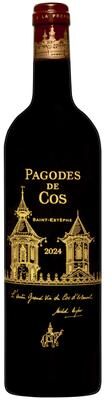
"""Chateau Cos d'Estournel""" """Chateau Cos d'Estournel Pagodes de Cos (Futures Pre-Sale) 2024 Red Wine - France""""""Crafted from dedicated plots identified thanks to the team's intimate knowledge of the estate's vineyard, Pagodes de Cos offers another interpretation of the terroir of Cos d'Estournel. Pagodes de Cos entices with its subtle harmony, aromatic..."42,97 $*Shipping: 0,00 $Secure redirect to the provider
-
"""Chateau Cos d'Estournel""" """Chateau Cos d'Estournel Pagodes de Cos (Futures Pre-Sale) 2025 Red Wine - France""""""Since its creation in 1994, Pagodes de Cos is made from grapes grown in a dedicated terroir whose vines are 40 years old on average. Seductive, balanced and voluptuous wine, each vintage is an excellent introduction to the style of Cos d'Estournel...."42,97 $*Shipping: 0,00 $Secure redirect to the provider
-
"""Chateau Cos d'Estournel""" """Chateau Cos d'Estournel Pagodes de Cos Blanc (Futures Pre-Sale) 2025 White Wine - France""""""Carefully managed yields bring remarkable density and richness to the vintage. The fruit of more than twenty years’ experience crafting white wines, Pagodes de Cos Blanc 2025 is singularly succulent and approachable. Sémillon brings roundness to..."58,97 $*Shipping: 0,00 $Secure redirect to the provider
-
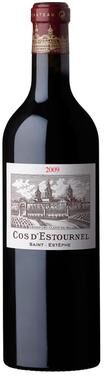
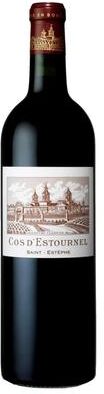
"""Chateau Cos d'Estournel""" """Chateau Cos d'Estournel 2009 Red Wine - France""""""Blend: 65% Cabernet Sauvignon 33% Merlot, 2% Cabernet Franc Deep garnet colored, the 2009 Cos d'Estournel features a myriad of wonderfully intense notes, including blackcurrant pastilles, redcurrant jelly, kirsch and blueberry compote with hints of..."395,99 $*Shipping: 0,00 $Secure redirect to the provider


-
Why is cos(120) equal to cos(60)? Please help me.
The reason why cos(120) is equal to cos(60) is because the cosine function has a period of 360 degrees. This means that the cosine values repeat every 360 degrees. Since 120 degrees is 60 degrees past 60 degrees, the cosine values at these angles are equal. In other words, the cosine function is symmetric about the y-axis, so the cosine value at an angle and its supplementary angle (180 degrees minus the angle) are equal. Therefore, cos(120) = cos(60). **
-
What are the roots of the function f(x) = cos(x) * cos(2x)?
The roots of the function f(x) = cos(x) * cos(2x) occur when the function equals zero. To find the roots, we set the function equal to zero and solve for x. The roots of this function occur at x = 0, x = π/3, and x = -π/3. These are the values of x for which the function f(x) equals zero. **
-
What is SIN COS and TAN?
SIN, COS, and TAN are trigonometric functions used in mathematics to relate the angles of a right triangle to the lengths of its sides. - Sine (SIN) is the ratio of the length of the side opposite an angle to the length of the hypotenuse. - Cosine (COS) is the ratio of the length of the side adjacent to an angle to the length of the hypotenuse. - Tangent (TAN) is the ratio of the length of the side opposite an angle to the length of the side adjacent to the angle. These functions are fundamental in trigonometry and are used to solve various problems involving angles and sides of triangles. **
-
For which angles does cos(0) apply?
The cosine function, cos(θ), applies for all angles. However, specifically for the angle of 0 degrees, the cosine function evaluates to 1. This is because the cosine of 0 degrees is the ratio of the adjacent side to the hypotenuse in a right triangle, and when the angle is 0 degrees, the adjacent side is equal to the hypotenuse, resulting in a cosine value of 1. **

What does an exponent behind cos mean?
An exponent behind cos represents the cosine function raised to a certain power. This means that the cosine function is being multiplied by itself the number of times indicated by the exponent. For example, cos^2(x) means cosine squared, which is equivalent to (cos(x))^2. The exponent behind cos is used to indicate repeated multiplication of the cosine function. **
How do I calculate cos(x^0.5)?
To calculate cos(x^0.5), you first need to find the value of x^0.5 (the square root of x). Once you have the value of x^0.5, you can then use a calculator or a trigonometric table to find the cosine of that value. Alternatively, you can use a scientific calculator that has a square root function and a cosine function to directly calculate cos(x^0.5). **
Top-Angebote
Products related to Cos:
-
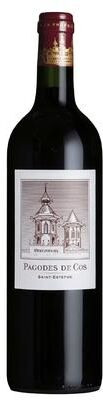
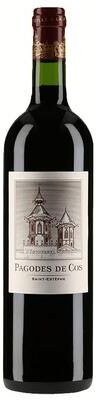
"""Chateau Cos d'Estournel""" """Chateau Cos d'Estournel Pagodes de Cos 2019 Red Wine - France""""""A creamy attack, buttery and spicy, characteristic of Pagodes de Cos precedes elegantly balanced aromas of blackcurrant, blueberry,blackberry, violet, bergamot and black tea. The 2019 vintage also presents velvety tannins and a very long finish..."65,99 $*Shipping: 0,00 $Secure redirect to the provider
-
"""Chateau Cos d'Estournel""" """Chateau Cos d'Estournel Pagodes de Cos 2017 Red Wine - France""""""The 2017 vintage is characteristically round on the palate butalso offers its own unique charm. Silky and immensely fresh, it is a lively, energetic wine with intense fruit. Velvety with a dense mid-palate, it is particularly flavorsome and..."60,99 $*Shipping: 0,00 $Secure redirect to the provider
-
"""Chateau Cos d'Estournel""" """Chateau Cos d'Estournel Pagodes de Cos (Futures Pre-Sale) 2024 Red Wine - France""""""Crafted from dedicated plots identified thanks to the team's intimate knowledge of the estate's vineyard, Pagodes de Cos offers another interpretation of the terroir of Cos d'Estournel. Pagodes de Cos entices with its subtle harmony, aromatic..."42,97 $*Shipping: 0,00 $Secure redirect to the provider
-
"""Chateau Cos d'Estournel""" """Chateau Cos d'Estournel Pagodes de Cos (Futures Pre-Sale) 2025 Red Wine - France""""""Since its creation in 1994, Pagodes de Cos is made from grapes grown in a dedicated terroir whose vines are 40 years old on average. Seductive, balanced and voluptuous wine, each vintage is an excellent introduction to the style of Cos d'Estournel...."42,97 $*Shipping: 0,00 $Secure redirect to the provider
-
Is cos(2x) the same as cos(x^2)?
No, cos(2x) is not the same as cos(x^2). The function cos(2x) represents the cosine of twice the angle x, while cos(x^2) represents the cosine of the square of x. These are two different functions with different inputs and outputs. **
-
How can one reverse the equation cos(x) * cos(2x) = 0?
To reverse the equation cos(x) * cos(2x) = 0, we need to find the values of x that make either cos(x) or cos(2x) equal to zero. This can be achieved by setting each factor equal to zero separately and solving for x. For cos(x) = 0, x can be π/2 + nπ, where n is an integer. For cos(2x) = 0, x can be π/4 + nπ/2, where n is an integer. By finding the values of x that satisfy either of these conditions, we can reverse the equation cos(x) * cos(2x) = 0. **
-
Why is cos(120) equal to cos(60)? Please help me.
The reason why cos(120) is equal to cos(60) is because the cosine function has a period of 360 degrees. This means that the cosine values repeat every 360 degrees. Since 120 degrees is 60 degrees past 60 degrees, the cosine values at these angles are equal. In other words, the cosine function is symmetric about the y-axis, so the cosine value at an angle and its supplementary angle (180 degrees minus the angle) are equal. Therefore, cos(120) = cos(60). **
-
What are the roots of the function f(x) = cos(x) * cos(2x)?
The roots of the function f(x) = cos(x) * cos(2x) occur when the function equals zero. To find the roots, we set the function equal to zero and solve for x. The roots of this function occur at x = 0, x = π/3, and x = -π/3. These are the values of x for which the function f(x) equals zero. **
Similar search terms for Cos
-
"""Chateau Cos d'Estournel""" """Chateau Cos d'Estournel Pagodes de Cos Blanc (Futures Pre-Sale) 2025 White Wine - France""""""Carefully managed yields bring remarkable density and richness to the vintage. The fruit of more than twenty years’ experience crafting white wines, Pagodes de Cos Blanc 2025 is singularly succulent and approachable. Sémillon brings roundness to..."58,97 $*Shipping: 0,00 $Secure redirect to the provider
-
"""Chateau Cos d'Estournel""" """Chateau Cos d'Estournel 2009 Red Wine - France""""""Blend: 65% Cabernet Sauvignon 33% Merlot, 2% Cabernet Franc Deep garnet colored, the 2009 Cos d'Estournel features a myriad of wonderfully intense notes, including blackcurrant pastilles, redcurrant jelly, kirsch and blueberry compote with hints of..."395,99 $*Shipping: 0,00 $Secure redirect to the provider
-
"""Chateau Cos d'Estournel""" """Chateau Cos d'Estournel 2017 Red Wine - France""""""Dense and deep, Cos d’Estournel 2017 reveals itself withtastefulness and grace. On the palate its tannins are exquisite—silky and seductive—and it offers the sophistication of a trulygreat wine with the body of an exceptional Cos d’Estournel. Its..."149,99 $*Shipping: 0,00 $Secure redirect to the provider
-
"""Chateau Cos d'Estournel""" """Chateau Cos d'Estournel 2006 Red Wine - France""""""The 2000 vintage of this wine was ranked #2 on the Wine Spectator's Top 10 Wines of 2003 The color of intense beauty. The nose expresses notes spices and licorice. The mouth is elegant and suave. This wine is distinguished by its tannins of great..."203,99 $*Shipping: 0,00 $Secure redirect to the provider
-
What is SIN COS and TAN?
SIN, COS, and TAN are trigonometric functions used in mathematics to relate the angles of a right triangle to the lengths of its sides. - Sine (SIN) is the ratio of the length of the side opposite an angle to the length of the hypotenuse. - Cosine (COS) is the ratio of the length of the side adjacent to an angle to the length of the hypotenuse. - Tangent (TAN) is the ratio of the length of the side opposite an angle to the length of the side adjacent to the angle. These functions are fundamental in trigonometry and are used to solve various problems involving angles and sides of triangles. **
-
For which angles does cos(0) apply?
The cosine function, cos(θ), applies for all angles. However, specifically for the angle of 0 degrees, the cosine function evaluates to 1. This is because the cosine of 0 degrees is the ratio of the adjacent side to the hypotenuse in a right triangle, and when the angle is 0 degrees, the adjacent side is equal to the hypotenuse, resulting in a cosine value of 1. **
-
What does an exponent behind cos mean?
An exponent behind cos represents the cosine function raised to a certain power. This means that the cosine function is being multiplied by itself the number of times indicated by the exponent. For example, cos^2(x) means cosine squared, which is equivalent to (cos(x))^2. The exponent behind cos is used to indicate repeated multiplication of the cosine function. **
-
How do I calculate cos(x^0.5)?
To calculate cos(x^0.5), you first need to find the value of x^0.5 (the square root of x). Once you have the value of x^0.5, you can then use a calculator or a trigonometric table to find the cosine of that value. Alternatively, you can use a scientific calculator that has a square root function and a cosine function to directly calculate cos(x^0.5). **
* All prices are inclusive of VAT and, if applicable, plus shipping costs. The offer information is based on the details provided by the respective shop and is updated through automated processes. Real-time updates do not occur, so deviations can occur in individual cases. ** Note: Parts of this content were created by AI.